Web design is evolving faster than ever — and 2025 is set to redefine how users experience the digital world. With technologies like AI, AR/VR, motion UI, and data-driven design becoming mainstream, websites are no longer just digital brochures; they’re immersive, intelligent, and performance-focused platforms that shape brand identity and user trust.
In this era of instant engagement, modern web design goes beyond looks — it’s about speed, accessibility, personalization, and seamless interaction across devices. Businesses that embrace the latest web design trends in 2025 will stand out, while those clinging to outdated practices risk falling behind in both user engagement and search visibility.
In this blog, we’ll explore the top tech trends transforming web design in 2025, and how your business can leverage them to build future-ready digital experiences that convert.
For a deeper look at optimizing your site’s visibility and structure, explore our blog on powerful on-page SEO tactics to boost your rankings fast.
Top Tech Trends Shaping Web Design in 2025
The web design landscape in 2025 is all about blending technology, creativity, and data to deliver smarter, faster, and more human-centered experiences. Here are the top tech trends transforming web design this year:
1. AI-Powered Design & Personalization
- AI tools are now helping designers automate layouts, generate visuals, and optimize user journeys.
- Websites are becoming smarter and adaptive, adjusting content and design based on user behavior and preferences.
- Predictive personalization enhances engagement and conversion rates, offering unique experiences for every visitor.
2. Voice and Conversational Interfaces
- With voice search and AI chatbots becoming mainstream, websites are shifting toward conversational design.
- Voice-activated navigation and voice-first experiences make browsing faster and more intuitive.
- Optimizing for voice SEO ensures better visibility on smart devices and search assistants.
3. Immersive 3D & AR Experiences
- 3D visuals and augmented reality (AR) are transforming how users interact with products online.
- Businesses, especially in eCommerce and real estate, use AR to offer virtual try-ons or space previews.
- Lightweight, optimized 3D elements enhance engagement without compromising page speed.
4. Data-Driven UX and Analytics Integration
- Web design in 2025 is increasingly data-backed — decisions are based on user behavior insights, not assumptions.
- Tools that analyze scroll patterns, clicks, and heatmaps help designers refine UX for better results.
- Real-time analytics integration ensures websites stay aligned with evolving user expectations.
5. Motion UI and Microinteractions
- Subtle animations and transitions are key to improving user engagement and storytelling.
- Microinteractions — like hover effects or button animations — make websites feel more dynamic and responsive.
- The focus is on maintaining balance between aesthetics and performance to ensure fast load times.
6. Sustainable & Performance-Focused Design
- Sustainability has entered web design — cleaner code, optimized images, and faster load times reduce digital carbon footprints.
- Core Web Vitals remain a priority, emphasizing speed, stability, and responsiveness.
- Minimalist, eco-friendly design enhances both user experience and search performance.
7. Accessibility & Inclusive Design
- Websites are being built for everyone — including users with disabilities.
- Accessible color palettes, screen reader compatibility, and keyboard navigation are now design essentials.
- Inclusive design not only ensures compliance but also improves overall usability and reach.
In 2025, successful websites are those that embrace technology, prioritize user experience, and focus on performance. Integrating these trends helps businesses stay competitive, future-proof their digital presence, and deliver experiences users love.
How Businesses Can Leverage These Trends
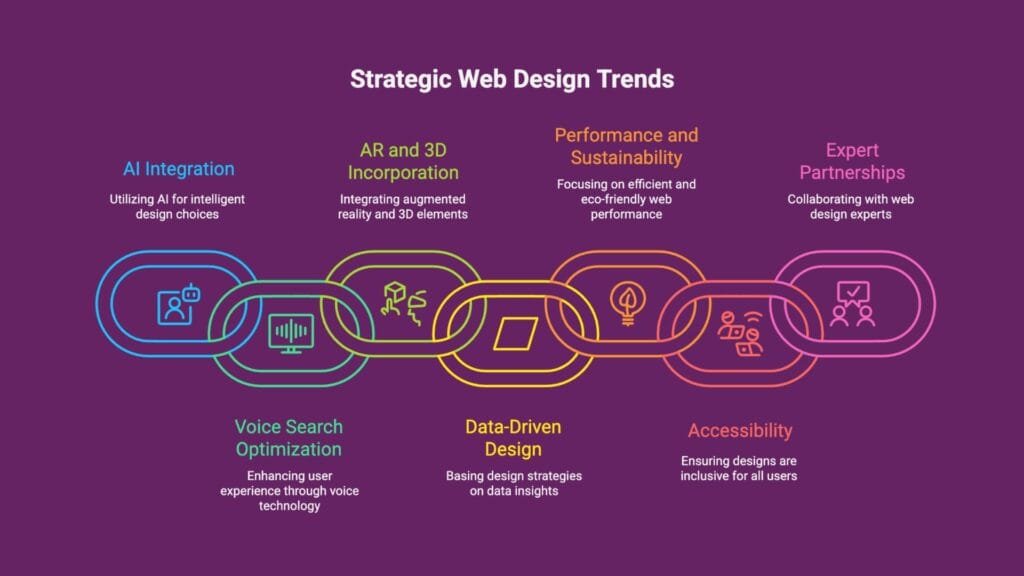
Adopting the latest web design trends in 2025 isn’t just about staying modern — it’s about creating smarter, faster, and more meaningful digital experiences that drive results. Here’s how businesses can effectively leverage these innovations to stay ahead:
1. Embrace AI for Smarter Design Decisions
- Use AI-driven design tools to automate repetitive tasks like layout generation, color palette selection, and content placement.
- Implement AI personalization engines to deliver dynamic content based on user preferences and browsing patterns.
- Analyze AI insights to make data-backed design improvements that boost engagement and conversions.
2. Optimize for Voice Search and Conversational UX
- Integrate voice-friendly navigation and chatbots to make customer interactions seamless.
- Use natural language keywords to enhance voice search optimization (VSEO).
- Create conversational experiences that align with how users speak, not just how they type.
3. Incorporate AR and 3D Elements Wisely
- Introduce AR previews or interactive 3D models to showcase products or services in real-world contexts.
- Optimize these elements to ensure fast loading and smooth performance across devices.
- Use AR experiences strategically to stand out in eCommerce, real estate, or portfolio websites.
4. Make Data the Core of Design Strategy
- Rely on analytics tools and user heatmaps to understand visitor behavior.
- Continuously refine layouts, CTAs, and navigation paths based on real-time data.
- Use data to build user-centric websites that adapt as user needs evolve.
5. Prioritize Performance and Sustainability
- Compress images, use efficient code, and implement lazy loading to enhance speed.
- Monitor Core Web Vitals to maintain top SEO performance.
- Adopt sustainable web design practices that reduce energy use and server load — good for both users and the planet.
6. Design for Everyone with Accessibility in Mind
- Follow WCAG guidelines to make your website accessible to users of all abilities.
- Add alt text, proper contrast ratios, and keyboard navigation for inclusivity.
- Accessibility not only broadens your reach but also improves SEO and brand trust.
7. Partner with Expert Web Design Teams
- Collaborate with a skilled web design agency (like Infometrix Technologies) that understands modern design, UX, and technology integration.
- Professionals can help translate these trends into a cohesive, brand-aligned digital strategy.
- Regularly update your website to ensure it evolves alongside emerging design and technology trends.
By leveraging these innovations, businesses can create future-ready websites that not only attract visitors but also convert them into loyal customers. The key lies in combining technology, creativity, and strategy — turning trends into tangible business growth.
Future of Web Design Beyond 2025
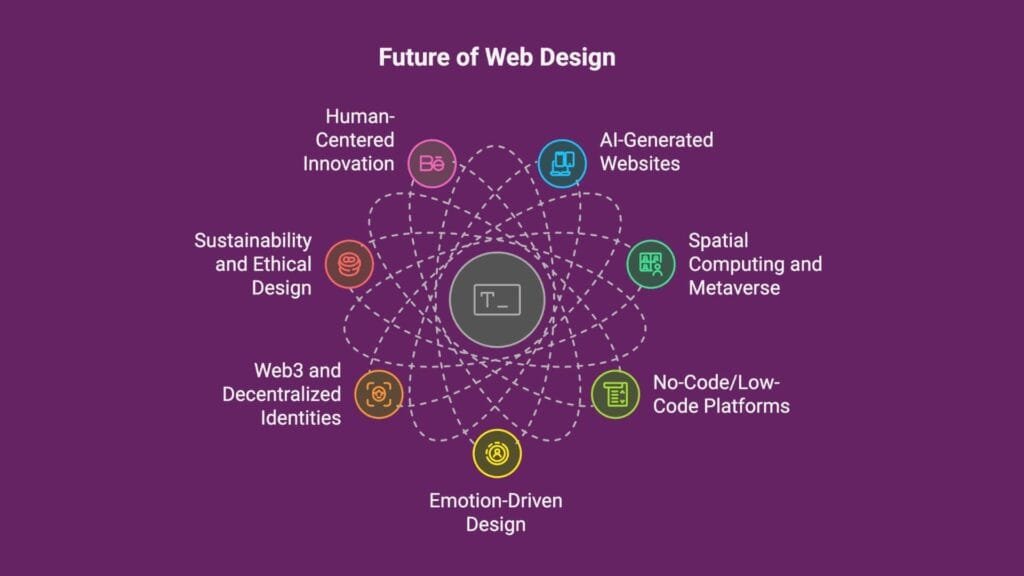
As technology continues to evolve, the future of web design will push boundaries far beyond aesthetics — focusing on intelligence, interactivity, and emotional connection. Here’s a look at what lies ahead for businesses and designers beyond 2025:
1. Rise of AI-Generated and Self-Optimizing Websites
- AI will design, test, and optimize websites autonomously, reducing human effort and turnaround time.
- Expect hyper-personalized web experiences, where layouts and content change dynamically based on user intent.
- Businesses will use AI-driven A/B testing to instantly identify and implement what converts best.
2. Integration of Spatial Computing and the Metaverse
- The web will merge with 3D virtual spaces, offering fully immersive brand experiences.
- Websites will evolve into interactive environments, where users can explore, shop, or collaborate in real-time.
- Early adoption of WebXR and metaverse-ready design will help businesses future-proof their online presence.
3. Growth of No-Code and Low-Code Platforms
- The no-code movement will continue empowering non-developers to create professional-grade websites.
- This democratization of design will lead to faster innovation and lower development costs.
- However, creative strategy and user experience will remain key differentiators for professional agencies.
4. Emotion-Driven and Context-Aware Design
- Future web design will focus on emotional intelligence, using sensors and AI to respond to user moods or environments.
- Adaptive color schemes, tone, and interactivity will change in real-time to create personalized experiences.
- Brands that master emotional design will forge deeper user connections and higher loyalty.
5. Web3 and Decentralized Digital Identities
- Web3 technologies will make websites more secure, transparent, and user-controlled.
- Users will interact using digital wallets or blockchain-based credentials, reshaping data privacy norms.
- Decentralized design will empower businesses to build trust-first ecosystems rather than one-way experiences.
6. Sustainability and Ethical Design Will Dominate
- As awareness grows, sustainable and ethical web design will become a global standard.
- Energy-efficient hosting, minimal data usage, and inclusive design will define the next decade.
- Brands will gain a competitive edge by aligning design choices with environmental and social responsibility.
7. Human-Centered Innovation Will Stay at the Core
- Despite automation, human creativity, empathy, and storytelling will remain irreplaceable.
- The most successful websites will blend cutting-edge technology with human touch, delivering experiences that resonate emotionally and function flawlessly.
The future of web design is intelligent, immersive, and inclusive. Businesses that start embracing these forward-looking trends today will not only stay relevant but also lead the digital transformation of tomorrow.
Conclusion
The evolution of web design in 2025 marks a turning point — where creativity, technology, and data come together to create experiences that are not only visually stunning but also intelligent, fast, and user-focused. As we move forward, the key to digital success lies in staying adaptable and future-ready.
Here’s what every business should take away:
1. Innovation is Non-Negotiable:
Staying updated with emerging web design trends ensures your website remains relevant and competitive in a fast-changing digital world.
2. User Experience Leads Everything:
Whether it’s AI personalization, accessibility, or performance optimization, the end goal should always be to enhance user satisfaction.
3. Technology and Creativity Must Work Together:
The best websites will balance automation and human creativity, combining smart systems with storytelling and emotional connection.
4. Data-Driven Design is the Future:
Continuous improvement through analytics and user insights will define which brands thrive in the digital landscape.
5. Partnering with Experts Makes the Difference:
Working with a professional web design agency like Infometrix Technologies helps businesses implement these trends effectively — turning innovation into measurable growth.
If you’re ready to transform your digital presence, explore our Website Development services to build fast, future-ready, and user-focused websites.
In essence, the future of web design belongs to businesses that are bold enough to embrace change. By integrating the latest technologies, focusing on performance, and designing for people first, your brand can build digital experiences that inspire, engage, and convert.