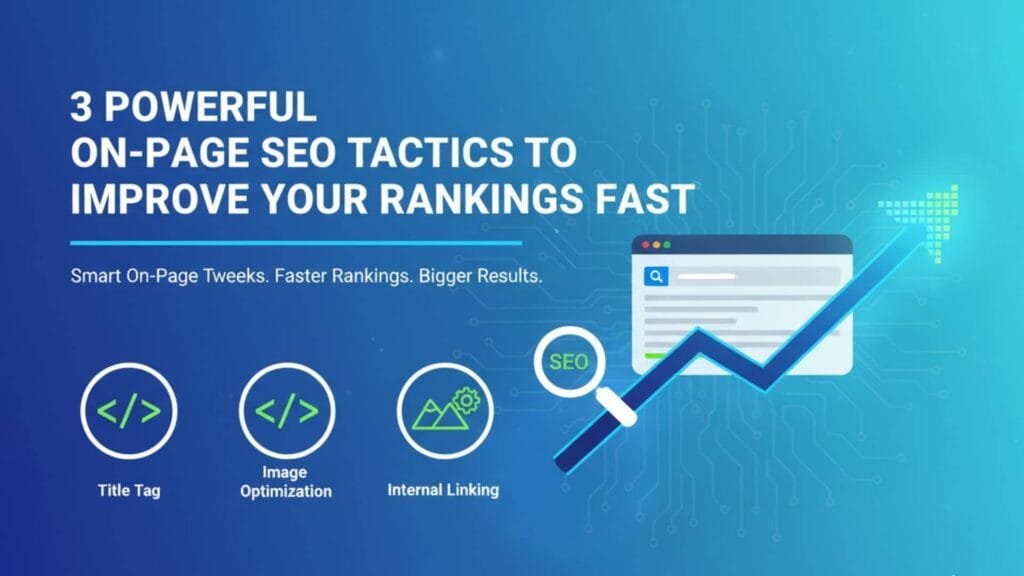
Think SEO success takes months of waiting and endless backlink building? Not always. The truth is, small on-page tweaks can create a visible ranking boost within days — if you know what to fix.
On-page SEO is the foundation of every high-performing website. It tells Google what your content is about and helps users find exactly what they’re searching for. In 2025, with search algorithms getting smarter, it’s not about keyword stuffing — it’s about relevance, user experience, and clarity.
In this post, we’ll share 3 simple yet powerful on-page SEO tricks you can apply right now to improve your visibility, click-through rates, and user engagement. These are data-backed, quick-win strategies that brands like yours can use to stay ahead in the rankings race.
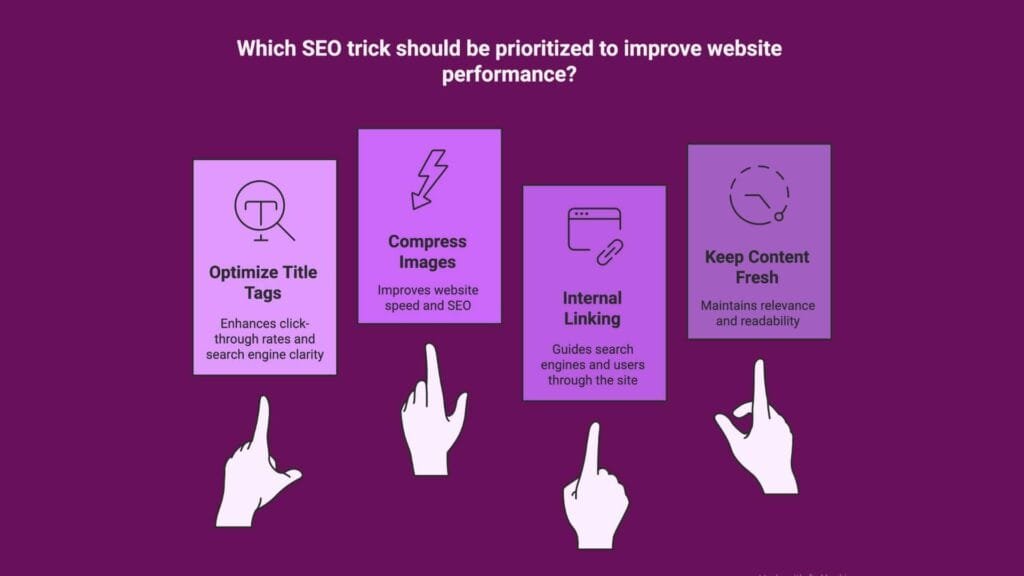
Trick #1: Optimize Title Tags & Meta Descriptions for Clicks and Clarity
Your title tag and meta description are the first things users see on Google — think of them as your digital billboard. A well-crafted title not only improves your click-through rate (CTR) but also helps search engines understand your page’s topic.
Start by placing your primary keyword naturally near the beginning of your title tag. Keep it under 60 characters so it doesn’t get cut off in search results. The meta description should be concise (around 150–160 characters), engaging, and include a call-to-action or value promise to encourage clicks.
Example:
Title: “3 On-Page SEO Tricks to Boost Your Rankings Fast | Infometrix Technologies”
Meta Description: “Want higher Google rankings? Discover 3 quick on-page SEO fixes that improve visibility and click-through rates instantly.”
Pro Tip: Use tools like Yoast SEO, Rank Math, or Ahrefs SERP Preview to test how your title and meta description appear on Google before publishing.
These small changes can lead to higher CTRs, better keyword relevance, and improved overall visibility — all without writing a single new blog post.
Trick #2: Compress & Optimize Your Images for Speed and SEO
High-quality visuals make your website engaging — but if your images are too heavy, they can slow your site down and hurt your rankings. Google prioritizes fast-loading pages, and image optimization is one of the easiest ways to improve your site speed and Core Web Vitals.
Start by compressing images before uploading them using tools like TinyPNG, Squoosh, or ShortPixel. You’ll reduce file size without losing quality. Next, add descriptive file names and keyword-rich ALT text. This helps Google understand what your image represents and improves accessibility for users.
Example:
Before: IMG_1234.jpg
After: on-page-seo-checklist-infometrix.jpg
Quick Image SEO Checklist:
- Compress every image before upload
- Use clear, keyword-relevant file names
- Add descriptive ALT text naturally
- Choose next-gen formats like WebP for faster load times
Pro Tip: Even a one-second delay in load time can reduce conversions. Faster pages don’t just rank better — they keep visitors longer and improve user satisfaction.
Trick #3: Internal Linking Magic – Guide Google and Users
Internal linking is one of the most underrated on-page SEO tactics — yet it’s incredibly powerful. By linking relevant pages within your site, you help Google understand your content structure, distribute link equity, and keep visitors exploring longer.
Every internal link acts as a roadmap for both users and search engines. Use keyword-rich anchor text naturally — instead of generic phrases like “click here,” link with meaningful text like “on-page SEO best practices” or “content optimization guide.”
For example, in our post on digital marketing strategies, we show how internal linking supports overall SEO performance.
Best Practices for Strong Internal Linking:
- Add 2–3 internal links in every blog post or page
- Link to contextually relevant content (not random pages)
- Use descriptive anchor text that reflects the linked page’s topic
- Regularly audit and update internal links as your site grows
Pro Tip: Tools like Ahrefs, Screaming Frog, or Link Whisper can help you find orphan pages and build a stronger internal link network.
When done right, internal linking not only boosts rankings but also improves user navigation, engagement, and dwell time — all signals Google values highly.
Bonus Tip: Keep Content Fresh & Readable
Even the best-optimized pages lose traction if they’re outdated. Search engines — and users — love fresh, relevant, and easy-to-read content. Regularly updating your blogs and web pages shows Google that your site is active and authoritative in your niche.
Start by revisiting older posts every few months. Update facts, replace broken links, and add new keywords or insights that reflect the latest trends. You can also improve readability by breaking long paragraphs into short, scannable sections and adding bullet points or visuals.
Quick Refresh Checklist:
- Update outdated stats, examples, and screenshots
- Add internal links to newer content
- Rework titles and meta descriptions if CTR drops
- Check readability with tools like Hemingway or Grammarly
Pro Tip: A simple content refresh can lead to a noticeable ranking boost without publishing anything new — it’s one of the smartest SEO wins most websites overlook.
Conclusion: Small Fixes, Big SEO Wins
You don’t always need massive overhauls or big budgets to see real SEO progress. Sometimes, it’s the small on-page tweaks — like refining your title tags, optimizing images, and building smart internal links — that make the biggest difference.
These strategies not only improve your rankings and visibility but also enhance user experience, site speed, and engagement — all factors Google rewards.
Remember, SEO is an ongoing process. Keep testing, updating, and improving your pages regularly to stay ahead in search results.
If you’re ready to take your optimization further, explore our SEO services to boost visibility, traffic, and conversions.